1

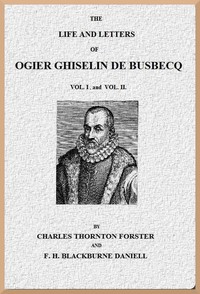
The Life and Letters of Ogier Ghiselin de Busbecq, Volumes 1 and 2 — Text and Context
12
2
Project Gutenberg
2016
Busbecq, Ogier Ghislain de, 1522-1592
Readers of public-domain and historical texts
Project Gutenberg digital edition
en
Edition facts
Words: 255,034
Reading time: 1109 min
Text sections: 28
Source:
Project Gutenberg record #53681
This editorial note examines the language and narrative voice in Busbecq's 16th-century letters, focusing on shifts between diplomatic reportage and personal reflection, as seen in the preface and footnotes.
The preface to this edition introduces Busbecq as a 'kind and genial cicerone,' a phrase that immediately signals the editors' desire to frame his letters as both historical record and personal narrative. The voice that emerges from the excerpts is layered: Busbecq himself writes with the precision of a diplomat, yet the editors' footnotes—defending his views on slavery or noting Evelyn's admiration for Turkish horses—create a running commentary that shifts the pace from reportage to reflection. This interplay between original text and editorial gloss is central to the reading experience.
The Diplomat's Register
Busbecq's letters, as presented in the excerpts, maintain a formal, observant tone typical of 16th-century diplomatic correspondence. He describes the Turkish court, military practices, and geography with a detached eye, as when he notes the 'Axylos, a woodless tract in Asia Minor.' The prose is dense with classical allusions—Homer, Suetonius, Xenophon—which anchor his observations in a learned European framework. Yet the pace is deliberate, often slowed by parenthetical asides or citations that invite the reader to pause and consider parallels. This register dominates the Turkish Letters, where Busbecq acts as an eyewitness to Ottoman power.
Editorial Interjections and Tempo
The editors, Forster and Daniell, frequently break into Busbecq's narrative with footnotes that alter the reading tempo. For instance, they defend his suggestion of slavery as 'an anticipation of the more merciful system of modern times,' a claim that halts the historical flow to engage in moral argument. Similarly, they quote Evelyn's diary to corroborate Busbecq's description of Turkish horses, creating a dialogue across centuries. These interjections vary in length—from brief citations to multi-paragraph defenses—and introduce a secondary voice that oscillates between scholarly support and correction. Readers must navigate this dual-layered text, where the pace quickens with Busbecq's narrative and slows with editorial commentary.
Classical Anchors and Shifting Register
Busbecq frequently invokes classical authors to frame his experiences, but the excerpts show how these references shift the register from reportage to erudite reflection. A footnote on the 'Digest or Pandects of Justinian' explains a term, while a comparison to 'Milton, Paradise Lost' links Turkish warfare to epic poetry. This technique creates a layered pace: the reader moves from concrete description (e.g., 'shooting with the crossbow has been a custom at Bousbecque') to abstract commentary. The editors amplify this by adding their own classical citations, such as Vopiscus on Egyptian chicken-hatching. The result is a text that demands attention to both the immediate scene and its wider cultural echoes.
Readers should attend to the footnotes as much as the main text; they are not mere asides but integral to the work's rhythm. The editors' voice—sometimes defensive, sometimes admiring—shapes how Busbecq's observations are received. For those interested in narrative voice, this edition offers a case study in how historical documents are mediated by later scholars, altering pace and perspective at every turn.
Reader reflection
Record your reading impressions
A brief reflection can help important ideas stay with you longer.
Your progress
0
/
10
2
How did the book work for you overall?
3
Would you recommend this book to another reader?
4
How demanding did the text feel?
5
How strong was your personal connection to the text?
6
How did the reading compare with what you expected?
7
How useful did the reading feel?
8
Which element worked best for you?
9
What did this book teach you most?
10