
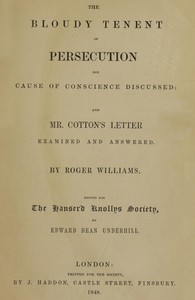
The Bloudy Tenent of Persecution for Cause of Conscience Discussed and Mr.…
This isn't a book with a plot in the traditional sense. It's a fiery 1644 pamphlet written as a dialogue between two voices: Roger Williams himself and a character representing John Cotton, a leading Puritan minister. The format is a point-by-point debate. Williams, who had been banished from Massachusetts for his radical views, argues passionately that civil governments have no right to punish people for their religious beliefs. His fictional opponent, 'Mr. Cotton,' defends the standard Puritan position of the time: that the state must enforce religious uniformity to maintain a godly society and prevent chaos.
The Story
The 'story' here is the battle of ideas. Williams lays out his case with scriptural references, logical reasoning, and stark examples of the violence caused by state-enforced religion. He paints a picture of a 'garden of the church' and a 'wilderness of the world,' arguing they must be kept separate for both to flourish. Cotton's voice pushes back, warning that allowing different beliefs will lead to social fragmentation and divine punishment. The tension builds through their replies, creating a real intellectual drama. You're not following characters on a journey, but you are witnessing the seismic shift in thought that would eventually lead to the First Amendment.
Why You Should Read It
You should read it because it makes a 400-year-old argument feel urgent. Williams's voice is not some dry historical artifact; it's pleading, frustrated, and visionary. When he writes about the 'bloody tenent' of persecution, you feel the weight of the wars and suffering he's referencing. His core idea—that forcing belief is a spiritual violence that creates hypocrites, not true believers—is incredibly powerful. It's also humbling to see how radical and lonely his position was at the time. This book connects the dots between a colonial outcast and the fundamental freedoms we often take for granted.
Final Verdict
This is for the curious reader who loves ideas and doesn't mind a challenging, primary-source text. It's perfect for history buffs, anyone interested in the roots of American political thought, or people fascinated by religious debates. It's not a light read, but it's a profoundly rewarding one. If you enjoyed the moral philosophy in something like Letter from Birmingham Jail, you'll find a kindred spirit in Roger Williams. Be prepared to go slow, but you'll be thinking about it long after you finish.
This text is dedicated to the public domain. Feel free to use it for personal or commercial purposes.
Ethan Allen
1 month agoHaving read this twice, it challenges the reader's perspective in an intellectual way. Exceeded all my expectations.
Kenneth Nguyen
10 months agoIf you enjoy this genre, the character development leaves a lasting impact. Worth every second.





Nancy Miller
2 months agoClear and concise.