
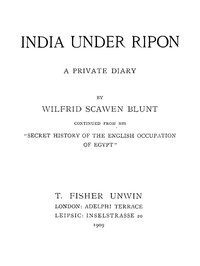
India under Ripon: A Private Diary by Wilfrid Scawen Blunt
Okay, let's set the scene. It's 1879, and Wilfrid Scawen Blunt—English poet, former diplomat, and all-around interesting character—heads to India. He's not a tourist, but he's not officially working for the government either. He's just a deeply curious observer with great connections. The new Viceroy, Lord Ripon, has just taken charge, and there's talk of big, liberal reforms. Blunt's diary follows his journey across the country over the next few years.
The Story
The 'story' is really Blunt's own awakening. He starts with the privileged access of an English gentleman, dining with officials and attending state functions. But he gets restless. He ventures beyond the colonial clubs and government houses. He talks to Indian landowners who are being squeezed dry by British land policies. He witnesses the aftermath of famine and questions why the response was so slow. He listens to Muslim leaders and Hindu intellectuals who are growing increasingly frustrated. The diary becomes a record of his shifting perspective, detailing the gap between Britain's lofty ideals and the often harsh, discriminatory reality of its rule. You see Ripon's well-intentioned reforms get bogged down by a resistant bureaucracy and racist attitudes among British officials on the ground.
Why You Should Read It
You should read this because it has the immediacy that textbooks lack. History feels different in the present tense. When Blunt describes a conversation or a scene of poverty, you're right there with him. It's not analyzed or sanitized. His critiques are powerful because they come from an insider who can't ignore what he sees. You feel his moral struggle. He's also a fantastic writer, so his descriptions of landscapes and people are vivid. The book doesn't just tell you about colonial tensions; it makes you feel the heat, the dust, and the simmering discontent. It’s a masterclass in how personal witness can challenge an entire system's narrative.
Final Verdict
This is perfect for anyone who loves history that feels human. If you enjoyed books like Behind the Beautiful Forevers for their ground-level view, or if you're fascinated by the complex personal stories behind empires, you'll be glued to this. It's especially compelling for readers interested in India, colonialism, or the simple power of a well-kept secret diary. It's not a light read, but it's a profoundly gripping one. You'll come away with a much messier, more complicated, and ultimately more truthful picture of the British Raj.
This is a copyright-free edition. Share knowledge freely with the world.





Donna Jones
1 year agoI had low expectations initially, however the narrative structure is incredibly compelling. Don't hesitate to start reading.