
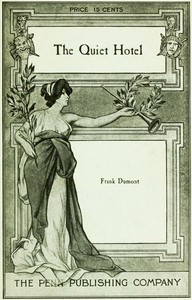
The Quiet Hotel: A Farcical Sketch in One Act by Frank Dumont
Let's set the scene. It's 1915, and we're at The Quiet Hotel, a countryside retreat that promises its guests peace and discretion. The manager, Mr. Binks, is the picture of strained politeness. His problem? The guests are anything but quiet. They're a collection of eccentrics, each with a secret to hide, all convinced they're the only one causing a stir.
The Story
The 'action' is really a snowballing series of misunderstandings. A man checking in as 'Reverend' is clearly no man of the cloth. A society woman is guarding a hatbox like it holds the crown jewels. A retired military man is on edge, convinced he's being followed. The plot kicks off when a lost letter gets delivered to the wrong room, revealing a secret affair. From there, it's a domino effect. One secret exposure leads to another. Identities are mistaken, lovers try to sneak through windows, and the poor hotel staff are run ragged trying to contain the gossip and chaos, all while maintaining that everything is perfectly 'quiet.' The whole play builds to a glorious, noisy climax where every secret is out in the open, and the hotel's name has become the biggest joke of all.
Why You Should Read It
What I love about this play is how fresh it feels. Dumont had a sharp eye for human silliness. The characters aren't deep, but they're instantly recognizable—we all know a busybody, a fibber, or someone trying too hard to look respectable. The humor comes from their sheer desperation to keep their facades intact while the world conspires to embarrass them. It's a reminder that social anxiety and the fear of being found out are timeless. Reading it, you can almost see the actors on stage, timing the door slams and double-takes perfectly. It's a masterclass in economical, physical comedy writing.
Final Verdict
This is a perfect little read for anyone who loves classic comedy, theater fans, or someone just looking for a half-hour of genuine amusement. It's especially great if you enjoy shows like Fawlty Towers or Noises Off—this is their great-grandparent. History buffs will get a kick out of the Edwardian-era social quirks, but you don't need any background to enjoy the universal panic of a secret about to be exposed. Keep your expectations light and fun. Don't look for deep meaning; look for slamming doors and raised eyebrows. The Quiet Hotel is a short, sweet, and very loud reminder that the most peaceful places often host the most chaotic people.
This is a copyright-free edition. Enjoy reading and sharing without restrictions.
Melissa Hill
2 years agoFinally found time to read this!
Donald Johnson
7 months agoA bit long but worth it.
Nancy Hernandez
5 months agoMy professor recommended this, and I see why.
Elizabeth Sanchez
9 months agoI had low expectations initially, however the depth of research presented here is truly commendable. Exactly what I needed.





Daniel Perez
2 months agoWow.