
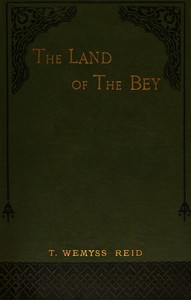
The land of the Bey : Being impressions of Tunis under the French by Reid
Published in 1882, The Land of the Bey is Thomas Wemyss Reid's eyewitness account of Tunis in the turbulent years following the French invasion of 1881. Reid, a seasoned British journalist, arrives not as a conqueror or a politician, but as a curious observer. His book is less a plotted story and more a series of vivid, on-the-ground snapshots of a society in the throes of dramatic change.
The Story
There's no fictional hero here. The 'story' is the city itself and its people. Reid takes us from the opulent, fading halls of the Bardo Palace, where the Bey still holds a shadow of his former power, to the chaotic, fragrant alleyways of the souk. We sit in on new French military courts, watch European engineers map the land, and see the uneasy mix of old Tunisian life with the sudden, forceful arrival of French soldiers and bureaucrats. He describes everything: the food, the architecture, the dress, and most importantly, the tense atmosphere. We see the confusion of local officials caught between two masters and the blunt, often arrogant, confidence of the new French administration imposing its will.
Why You Should Read It
What makes this book special is its immediacy. This isn't a dry history written decades later. Reid is reporting what he sees and hears as it happens. You get the dust, the smells, the overheard conversations, and the palpable sense of uncertainty. He doesn't shy away from criticizing the French methods, which he sometimes finds harsh and dismissive of local customs, nor does he romanticize the old Ottoman rule. His perspective is that of an outsider from another empire (Britain), which gives him a unique, comparative viewpoint. Reading it feels like flipping through a remarkably articulate blogger's travel journal from the 19th century.
Final Verdict
Perfect for history buffs who want to move beyond dates and treaties and into the messy reality of the past, and for travel writing fans who enjoy sharp, opinionated observation. If you liked the immersive feel of books like The Pillars of Hercules by Paul Theroux but wish you could go back in time, this is your chance. It's a short, potent, and surprisingly accessible window into a pivotal moment that shaped modern North Africa, told by a guide who isn't sure if what he's witnessing is progress or chaos. Just be ready for the unvarnished attitudes of the 1880s to come through in his writing.
This historical work is free of copyright protections. Feel free to use it for personal or commercial purposes.
Jackson Young
9 months agoJust what I was looking for.
Ashley Gonzalez
1 year agoThe layout is very easy on the eyes.
David Scott
3 days agoAmazing book.
Steven Scott
5 months agoGood quality content.




Amanda Walker
1 year agoThanks for the recommendation.