
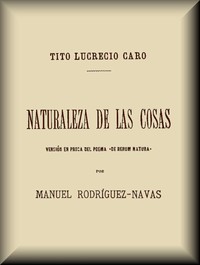
Naturaleza de las cosas: Versión en prosa del poema «De rerum natura»
Let's be honest, a prose version of a first-century BC Latin poem doesn't sound like a page-turner. But trust me, Naturaleza de las cosas is one of the most mind-expanding books I've picked up this year. It takes the dense, poetic arguments of Lucretius and translates them into clear, straightforward Spanish prose. The result is a direct conversation with a radical thinker from the past.
The Story
There isn't a plot in the traditional sense. Instead, the book builds a complete picture of the universe from the ground up. It starts with the fundamental rule: nothing comes from nothing. The author then introduces the idea of atoms—tiny, indestructible, and constantly moving particles that make up everything. Stars, rocks, trees, and human beings are all just temporary arrangements of these atoms in the void. He uses this theory to explain everything from magnetism and weather to the nature of the mind and soul (which he argues is also material and dissolves at death). The core narrative is the argument itself: a logical, step-by-step case for a universe governed by natural laws, not by the whims of angry gods.
Why You Should Read It
I was blown away by how modern and relevant it feels. The central message is about freeing yourself from fear, especially the fear of death and divine punishment. The author's calm insistence that death is simply a return to atoms is strangely liberating. It pushes you to focus on the beauty and pleasure of the present life. Reading it, you get this incredible sense of connection—someone grappling with the same big questions we do today, armed only with observation and reason. It’s a powerful reminder that searching for truth and living without superstition is a very old human desire.
Final Verdict
This book is perfect for curious minds who enjoy philosophy, the history of ideas, or early science. If you liked books like Meditations by Marcus Aurelius or The Swerve by Stephen Greenblatt, you'll find a kindred spirit here. It's also great for anyone who wants a challenging but rewarding read that will stick with them long after the last page. Don't expect a novel; expect a fascinating, persuasive lecture from one of history's most original thinkers. It might just change how you see the world.
This historical work is free of copyright protections. It is now common property for all to enjoy.
Kimberly Davis
9 months agoThe clarity of the introduction set high expectations, and the footnotes provide extra depth for those who want to dig deeper. I feel much more confident in my knowledge after finishing this.
Jennifer Thomas
1 year agoThis was exactly the kind of deep dive I was searching for, the practical checklists included are a great touch for real-world use. Finally, a source that prioritizes accuracy over hype.
David Gonzalez
7 months agoThe information is current and very relevant to today's needs.
Richard Jones
1 year agoThe balance between academic rigor and readability is perfect.

Robert Moore
1 year agoThe layout of the digital version made it easy to start immediately, the objective evaluation of the pros and cons is very refreshing. Well worth the time invested in reading it.